Pickleball Rules NZ: The Kitchen, the Two-Bounce Rule and Scoring
Master pickleball rules: serving, side-out scoring, double-bounce, and the 7-ft kitchen—plus easy ways to start playing in Hamilton.
Nic Woods
October 2, 2026
Pickleball Rules, Scoring & the Kitchen (Complete Guide)
Pickleball uses side-out scoring (only servers score), games usually to 11, win by 2, and the non-volley zone (“kitchen”) is 7 ft from the net on each side. The double-bounce rule means the serve and the return must bounce before anyone may volley.
Court & kitchen basics
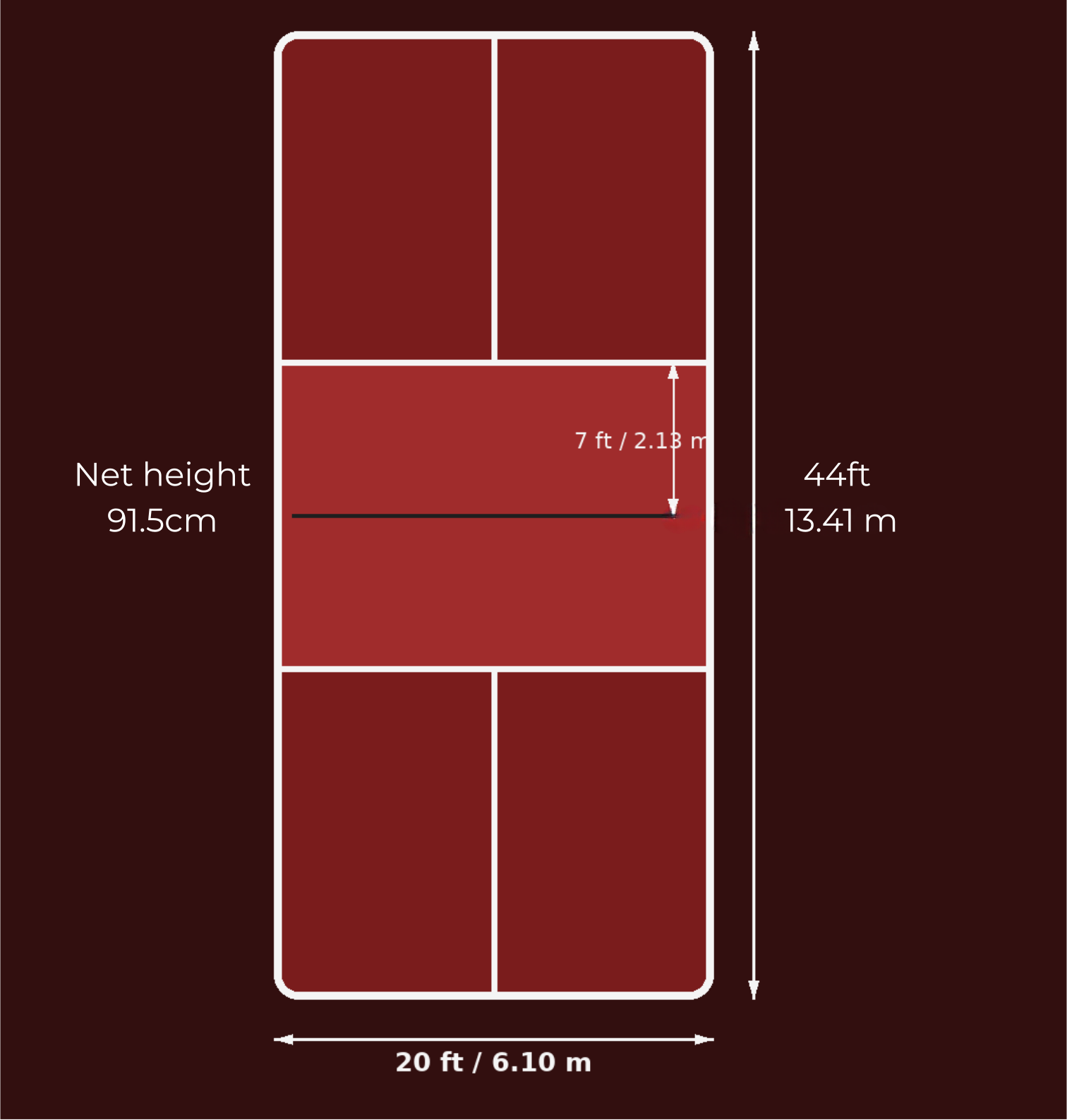
Size: ~13.4m × 6.1m (doubles); singles uses a narrower width.
Non-volley zone (NVZ/kitchen): a 7-ft strip each side of the net; lines are part of the NVZ.
Kitchen rule: you cannot volley (hit out of the air) while any part of you touches the NVZ line or is inside the NVZ.
After a bounce: you may step into the NVZ to play a ball that has bounced.
Serving (doubles & singles)
Underhand: paddle moves upward, contact below the waist/navel, and paddle head below the wrist at contact.
Volley serve (out of the air) or drop serve (let it bounce first) are both legal.
Cross-court: serve diagonally to the opposite box; feet behind the baseline at contact.
Let serves: modern rules play lets live—if the serve clips the net and lands good, play on.
Faults: stepping on/over baseline at contact, serving to the wrong box, out, or into the net.
Doubles rotation (read this twice):
The team that starts serving begins with server #2 position empty; by convention many start the very first service with the second server to equalize advantage.
When your team wins a point, the same server switches sides (right ↔ left) and serves again.
When your team loses a rally on serve, the serve passes to your partner (second server). Lose again and it’s a side-out—serve goes to the other team.
In doubles, the server’s score being even means serving from the right; odd means left.
The double-bounce principle
The serve must bounce before the returner plays it.
The return must bounce on the server’s side before the serving team may volley.
After those two bounces, volleys are allowed (respecting the kitchen).
Kitchen clarifications (hotly debated)
Momentum matters: if you volley and your momentum carries you into the NVZ after contact, it’s a fault (even if the ball is dead).
Equipment counts: dropping your paddle/hat into the NVZ during/after a volley = fault.
Reaching over: you may reach over the NVZ/line to volley if your feet/body don’t touch the NVZ.
Toes on the line: the NVZ line is NVZ—toes touching it during a volley = fault.
Scoring (side-out)
Only the serving side scores points.
Standard games to 11, win by 2 (tournaments may use 15 or 21).
The score call is three numbers in doubles: server’s score – receiver’s score – server number (1 or 2).
Timeouts and switches: tournaments have formal timeouts; for rec play, agree house rules before you start.
Faults & odd situations
Foot faults on the serve (baseline) or kitchen foot faults on volleys.
Ball contact with a player/clothing before it touches the ground = point to the other team.
Permanent objects (ceiling, lights) are out if struck.
Let calls (on serves) are generally not used—play the ball.
.png)

%20(1).png)

.png)